Agenda
PhD Thesis Defence
- Thursday, 21 May 2026
- 10:00-11:30
- Aula Senaatszaal
Compositional Generative Models: for Generalizable Scene Generation and Understanding
Yanbo Wang
Human intelligence is fundamentally compositional: it constructs new ideas by flexibly recombining known concepts, enabling generalization to entirely new tasks. We aim to develop intelligent systems with similar robust generalization capabilities. To that end, we develop compositional generativemodeling frameworks and present three research thrusts that advance scene generation, decomposition, and understanding.
First, we introduce a hierarchical object-centric generative model that integrates latent variable modeling with object-centric representation learning, enabling coherent multiobject scene generation and fine-grained object-level editing. This approach overcomes limitations of prior object-aware models by supporting flexible object morphology and significantly improving in-distribution generalization.
Second, we propose an unsupervised compositional image decomposition method that represents images as compositions of energy landscapes encoded by diffusionmodels. This enables the extraction of reusable global and local visual factors, such as shadows, expressions, and objects, and supports zero-shot compositional image generation by recombining these factors into novel configurations far outside the training distribution.
Third, we develop a compositional inverse generative modeling framework for scene understanding. By formulating inference as likelihood maximization over conditional generative model parameters, we show how composable diffusion models enable object discovery andmulti-label classification in scenes substantially more complex than those seen during training, including generalization to images with more objects or new configurations. The framework also supports zero-shot category inference using pretrained generative models without additional training.
Overall, these contributions demonstrate that the incorporation of compositional structure into generative modeling yields interpretable, controllable, and significantly more generalizable intelligent systems. This thesis offers a step toward building intelligent agents with the flexible, systematic compositional imagination characteristic of human cognition.
Additional information ...
Agenda
- Wed, 11 Mar 2026
- 17:30
- Aula Senaatszaal
PhD Thesis Defence
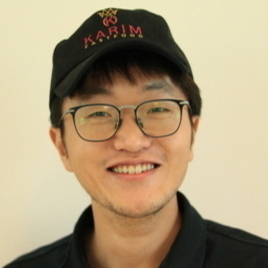
Simin Zhu
Towards Robust Radar Perception in Autonomous Vehicles: Deep Learning Methods for Motion Estimation, Radar Calibration, and Scene Segmentation
- Thu, 30 Apr 2026
- 12:30
- Aula Senaatszaal
PhD Thesis Defence
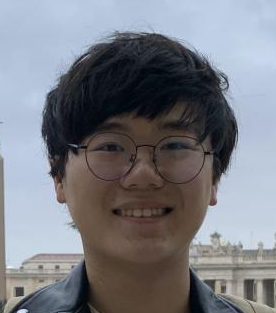
Yanbin He
Kronecker Compressed Sensing With Structured Sparsity
Algorithms, guarantees, and applications
- Thu, 21 May 2026
- 10:00
- Aula Senaatszaal
PhD Thesis Defence
Yanbo Wang
Compositional Generative Models: for Generalizable Scene Generation and Understanding
building intelligent agents with the flexible, systematic compositional imagination characteristic of human cognition